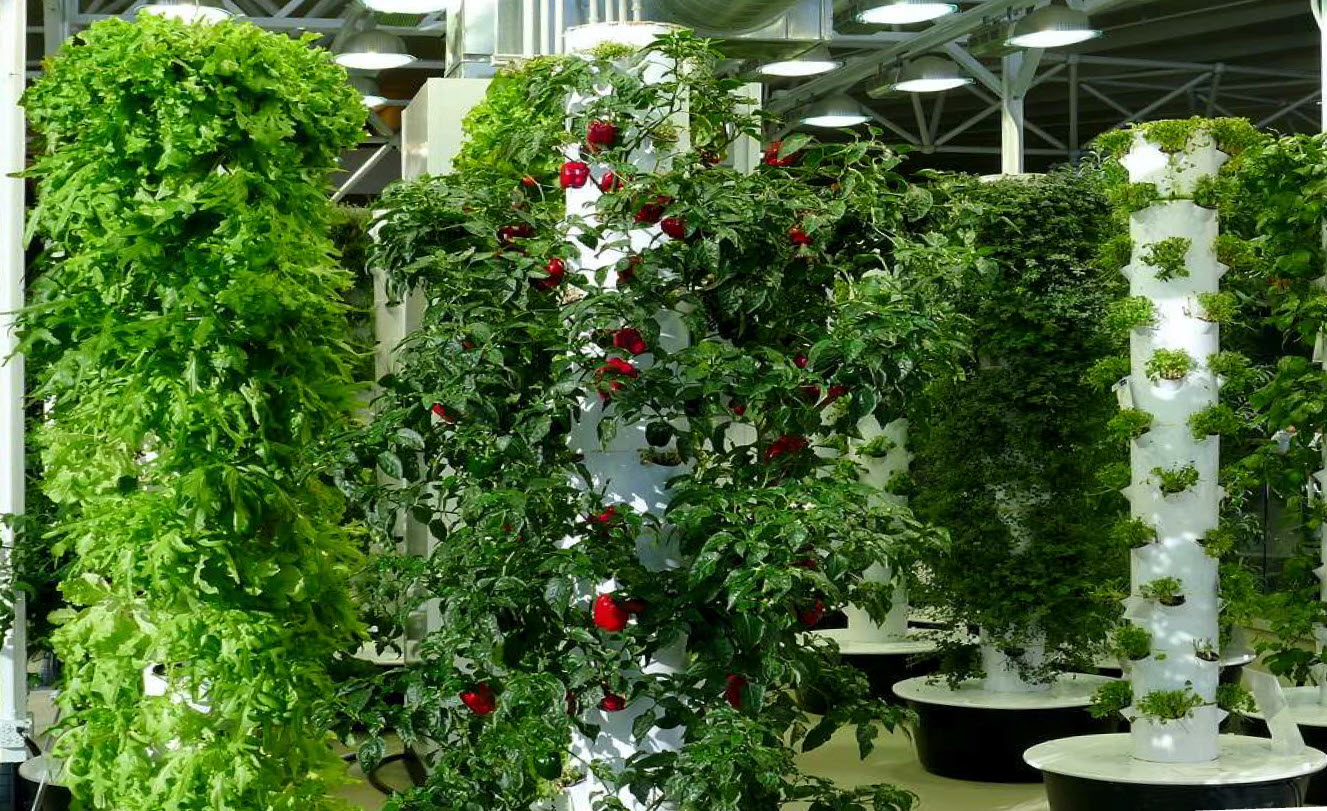
A complete system, not just a rack
Greenfield Hydroponics builds controlled-environment vertical farms with IoT-driven monitoring for water, pH and nutrients. Every installation includes computer controls, fertigation (water and nutrients), illumination, and grow towers and channels — delivering sustainable, pesticide-free produce year-round.
Every crop, fully instrumented
| Climate control | Temperature and humidity tuned automatically |
|---|---|
| LED lighting | Full-spectrum light on optimized cycles |
| Water flow | Recirculating flow monitored around the clock |
| Nutrient dosing | A precise nutrient mix delivered on demand |
| pH & EC levels | Sensors hold readings in the ideal range |
| Cloud analytics | Live data streamed to the SmartAPP dashboard |
The Greenfield Ag SmartAPP adds traceability, people management, production management and financial management, giving growers remote control of the whole operation. Read more about Agriculture Kit 4.0 →
Why hydroponics?
- 95% less water — closed-loop systems recirculate what soil farming would lose.
- No pesticides — the controlled indoor environment keeps crops clean.
- Year-round yield — consistent harvests in every season, independent of weather.
- Higher output — vertical stacking delivers far more produce per square foot.
What can we grow in the towers?
A community farm can run several crop programs side by side: leafy greens and lettuces harvested daily, fresh herbs cut to order, microgreens ready in days, vine-ripened tomatoes year-round, seasonal fruiting crops, and wheatgrass for cold-pressed green juice.
- Fruit and vegetables — more than 40 crops, from cabbage, broccoli and celery to peppers, zucchini, cucumbers, melons, strawberries and tomatoes.
- Herbs — around 50 varieties, from basil and mint to lemongrass, shiso and stevia.
- Edible flowers — calendula, marigolds, monarda, nasturtiums, pansies, salvia, dwarf sunflowers and violas.
- Ornamental flowers — more than 50 varieties including celosia, cosmos, phlox, snapdragon, statice, zinnia and sweet peas.
Fodder for the herd, too
The same controlled-environment approach grows nutritious, pesticide-free animal fodder for cattle, sheep and other livestock. See how the GHI Fodder System works →