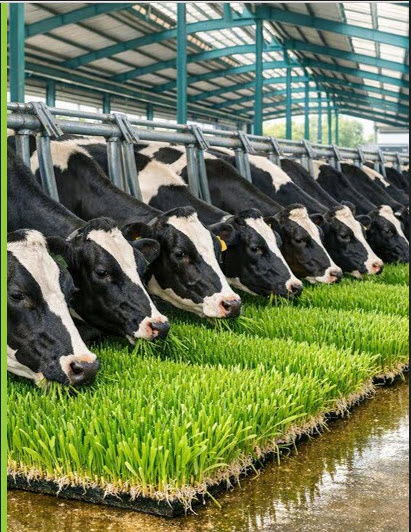
Feed is the largest controllable cost in most livestock operations, and the supply behind it is fragile. A dry season raises hay prices, freight adds to every bale, and winter means months on stored feed. Meanwhile, most operators learn how an animal is doing only when someone happens to see it.
Greenfield Hydroponics (GHI) addresses both problems at once. The automated fodder system grows fresh sprouted forage on site on a roughly seven-day cycle, using up to 90% less water than field forage and no pesticides. Greenfield Smart Collars then track feed intake, overall health and GPS location for every animal on the program.
GHI fodder vs. traditional cultivation
GHI wins on the factors an operator cannot control in the field: water, weather, land, season and freight.
| Factor | GHI automated fodder | Traditional forage, hay and grain |
|---|---|---|
| Water use | Up to 90% less than field forage; camels about 660 L per ton vs. 270,000 L conventional | Rain or irrigation; most water lost to soil and evaporation |
| Water source | GTG atmospheric water generators make water from the air; existing supply as backup | Wells, rivers or municipal lines exposed to drought and quality swings |
| Growing cycle | About 7 days seed to feed, harvested daily | One to several cuttings a year |
| Season | Every day of the year, indoors | Growing season only; winter relies on stored feed |
| Land | A compact room replaces acres of cropland | Large acreage plus storage barns |
| Weather risk | Climate-controlled room, insulated from drought, frost, flood and heat | Full exposure; one bad season raises prices and cuts supply |
| Chemicals | No pesticides or herbicides | Pesticides, herbicides and fertilizer common |
| Freshness | Fed fresh, as a living green mat | Dried, baled and stored for months; nutrients and palatability decline |
| Storage losses | Grown to daily demand, little to store | Mold, spoilage, pests and fire risk in stored hay |
| Freight | Grown where the animals are | Hay often trucked long distances; fuel and freight in the price |
| Price exposure | Predictable cost from seed, power and labor | Tied to volatile regional hay and grain markets |
| Labor | Automated irrigation, lighting and climate; labor limited to seeding and harvest | Planting, cutting, raking, baling, hauling and stacking, plus field equipment |
| Traceability | Seed-to-trough records via the AgTech SmartAPP | Often unknown origin for purchased hay |
| Site fit | Works on arid land, brownfields and sites with no arable soil | Needs fertile soil and a suitable climate |
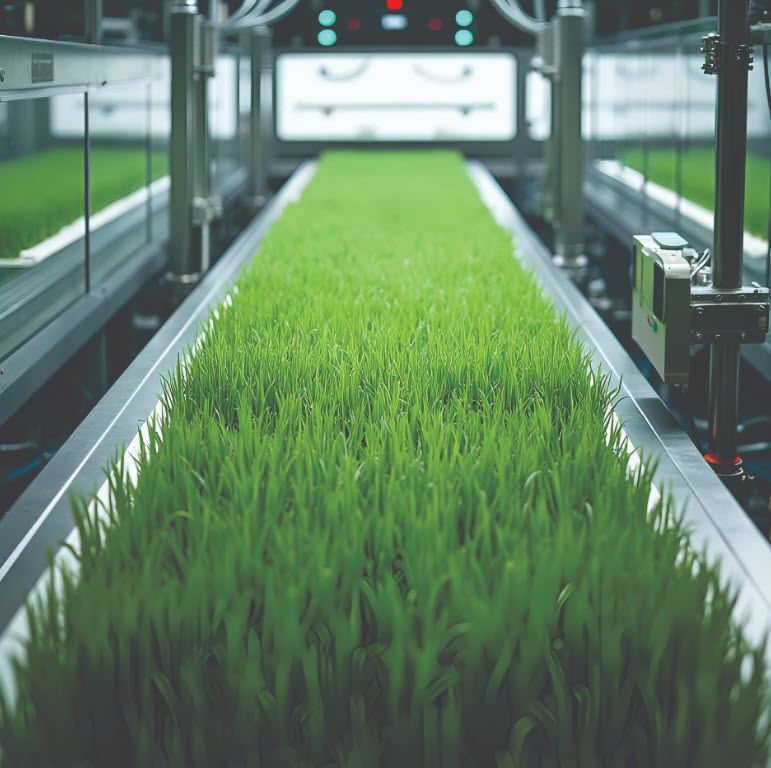
Ten competitive advantages of the GHI fodder system
- Water independence. Paired with GTG atmospheric water generators (100 L to 10,000 L per day), the system makes its own water. The humid grow room suits the generators and lets crop moisture be recaptured, so production continues through drought.
- Supply security. Feed is grown on site every day, cutting reliance on trucked-in hay and the regional markets that spike after a dry year.
- Cost predictability. Volatile hay and grain prices give way to known inputs: seed, power and limited labor. Feed budgets become plannable years ahead.
- Land efficiency. A grow room replaces acres of forage. Freed land can carry more animals or other crops, and sites with poor or no soil become viable.
- Year-round consistency. The same fresh feed every day of the year, with no seasonal dip in quality or switch to stored winter feed.
- Fresh, clean feed. A living green mat, fed within hours of harvest and grown without pesticides or herbicides. No mold, dust or spoilage from long storage.
- Automation and data. The AgTech SmartAPP logs production, so output is measured rather than estimated.
- Smaller footprint. Less water, no field chemicals, no long-haul freight and no field machinery, which supports sustainability goals and buyer requirements.
- Scales to the herd. Systems are sized to species, head count and daily output for cattle, horses, sheep, goats, pigs and camels.
- Ownership. The operator owns the system and the feed supply, delivered turnkey from design and water sizing through installation, commissioning and training.
Greenfield Smart Collars: every animal, around the clock
The Greenfield Precision Livestock Farming Collar tracks three things for every animal: feed intake, overall health and GPS location. Data flows to the Greenfield Collars app on the operator's phone, with herd status, health trends, a location map and alerts.
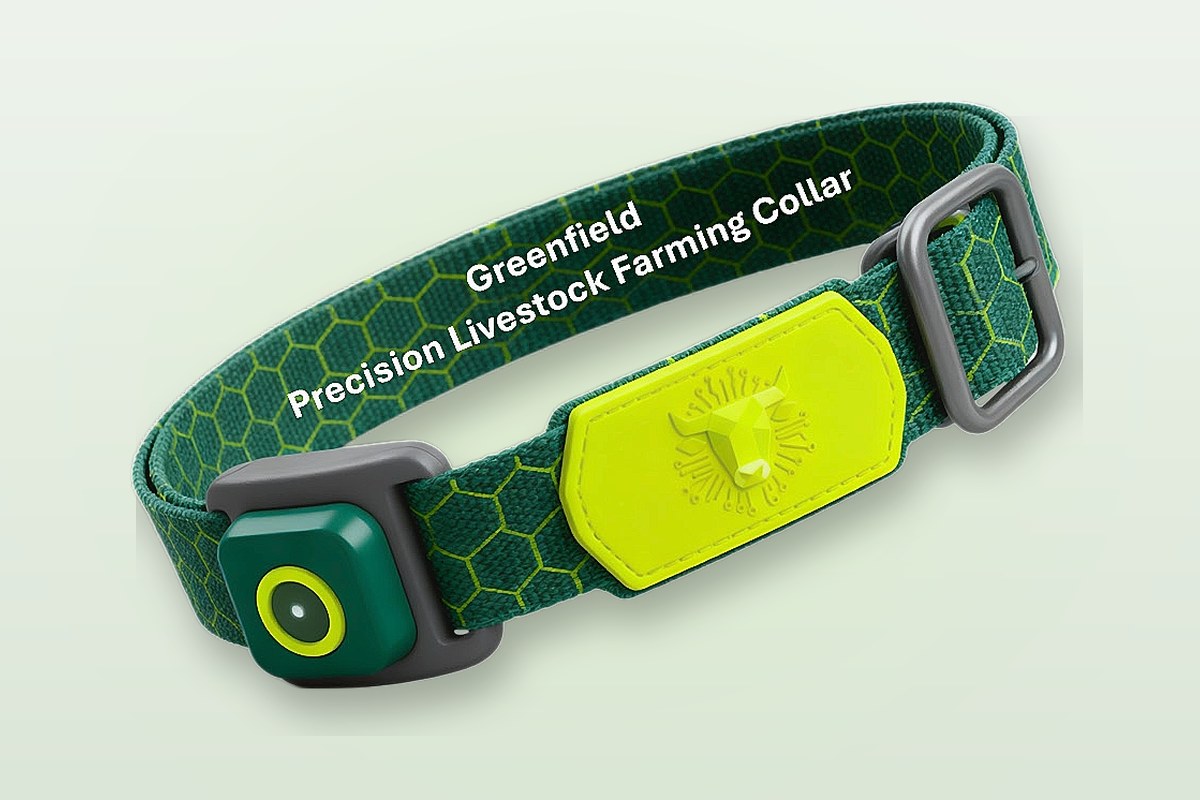
- Feed intake. Feeding time and behavior per animal, showing who is eating, how much and how that changes when fodder enters the ration.
- Overall health. Activity, rumination and resting patterns that flag illness, lameness, heat stress or estrus early, often before visible signs.
- GPS location. Real-time position, grazing patterns and geofence alerts for animals that stray, are stolen or go missing on large or open range.
- Alerts. Push notifications for abnormal behavior or location, so problems are handled the same day.
Collars are available for cattle, horses, sheep, goats and camels.
Collars vs. traditional herd monitoring
| Need | Greenfield Smart Collar | Traditional practice |
|---|---|---|
| Feed intake | Per-animal feeding behavior, logged continuously | Herd-level estimate from what is put out and left over |
| Illness detection | Behavior changes flagged early, often before visible symptoms | Spotted by eye during checks, often once already sick |
| Location | Real-time GPS and geofence alerts | Riding or driving the range; counting at the gate |
| Lost or stolen animals | Last known position and alert | Discovered at the next count |
| Coverage | Every animal, around the clock | Whoever is seen, when staff are present |
| Records | Automatic history per animal in the app | Paper notes or memory |
| Labor | Checks focused on flagged animals | Routine walk-throughs of the whole herd or flock |
The combined advantage: grow it, feed it, measure it
No traditional supplier offers feed production and animal data from one source. The fodder room records what is grown each day, and the collars record how each animal eats and responds.
- GrowThe fodder system produces a known daily volume, logged in the AgTech SmartAPP.
- FeedFresh fodder goes into the ration at the rate set with a nutrition advisor.
- MeasureCollars show intake, health and activity for every animal on the program.
- AdjustDaily output and ration are tuned from real animal response.
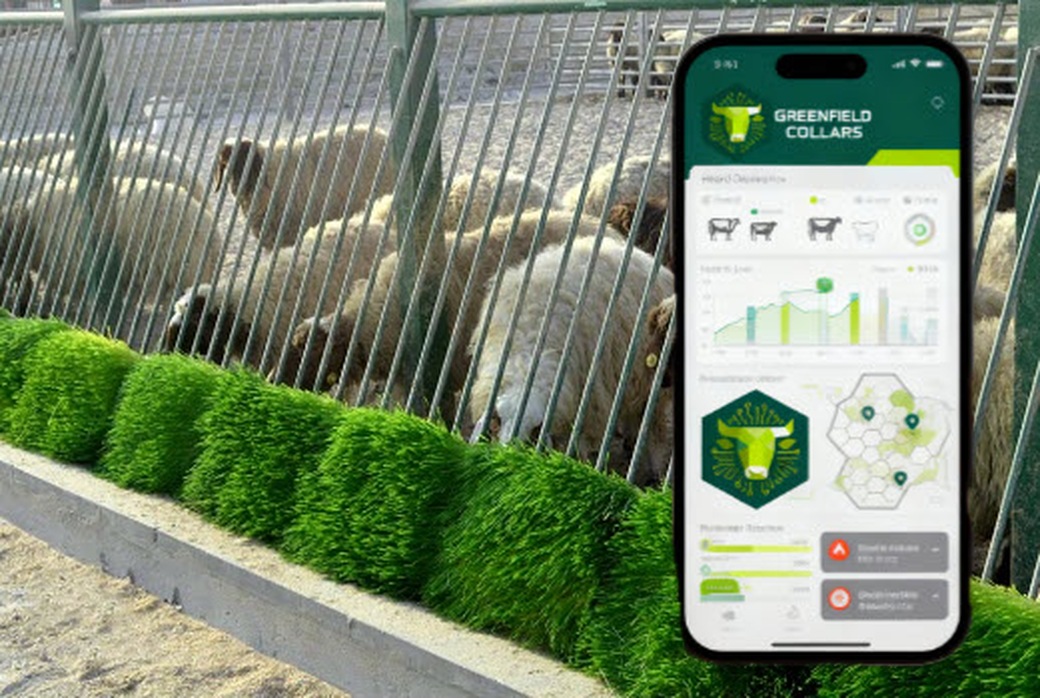
For operators, that means proof: whether fodder improves intake, condition and health shows up in the data rather than in a sales claim. For lenders and investors, it means a measurable, auditable operation.
Honest positioning
GHI fodder is a high-value part of the ration, not a universal replacement for all feed.
- Sprouted fodder is high in moisture, so most operations still feed some dry roughage or grain. Set inclusion rates with a nutrition advisor.
- Seed supply, electricity and local water quality shape system size and operating cost; GTG water generators and backup supply cover the water side.
- Operations with cheap local pasture and reliable rain may use fodder mainly as a drought, winter or finishing supplement.
- Remote range may need gateways or cellular coverage planning for collar GPS and data upload.
Learn more on the Hydroponic Animal Fodder Systems page, in the GHI Fodder System Executive Overview, or in our posts on how the fodder system works and Greenfield Smart Collars.